The Resurgence of Piracy (1)

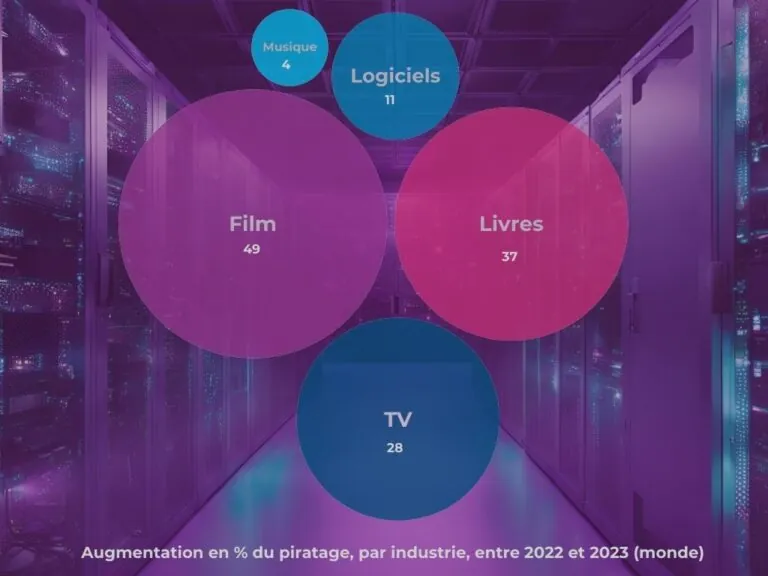
After a notable drop in online piracy in the 2010s, then a very visible rebound during the COVID-19 pandemic, one might have expected the numbers to fall again once things returned to normal; yet some content, and more specifically films and series, is pirated more than ever, despite the efforts of governments and companies. Why? That is what we will look at in this article.
A Technology That Benefits Both Sides
Anti-piracy often relies, and sometimes too heavily, on technology… but so do pirates.
Circumvention technologies are constantly evolving, allowing pirates to hold their ground again, or even stay ahead of security measures. For individuals, virtual private networks (VPNs), for example, hide users' IP addresses, making them harder to track, and therefore making their illegal activities harder to detect. They are very simple to use even without technical skills, and their existence is now widely known.
AgencePDN gets pirated content removed: see our solutions by sector.
In the early 2000s, when piracy first appeared, downloading a file carried an enormous risk, because such files were very often used to spread viruses. Thanks to advances in antivirus software, this risk is no longer as high as it once was, and the public knows it. People therefore have fewer and fewer reservations about downloading, no longer being very afraid of this risk.
In addition to these tools, illegal streaming platforms regularly emerge, offering pirated content in high quality. These services often imitate legal sites, making it hard for the average user to tell the two apart. Some even offer better-designed usability and a better user interface than the official sites..
The growing accessibility and sophistication of these circumvention technologies make piracy much easier.
The Sinews of War: Money
This year, Netflix decided to raise its prices and introduce plans that include ads, thus making a step back from its original selling point, namely cheap, ad-free television shows and films. Other companies followed Netflix's lead by raising their prices and introducing ads in their paid offerings.
Now, if you want access to the most popular streaming services without ads, you will have to pay (in euros):
- Netflix: 12.99 euros
- Spotify: 10.99
- HBO Max: 9.99
- Amazon Prime: 6.99
- Disney Plus: 11.99
In total, these plans come to more than 600 euros a year.
In addition, some have given up legal subscriptions altogether after realizing how much personal data streaming companies collect with almost no oversight, turning to illicit alternatives to keep enjoying the content they love while feeling that they are better protecting their privacy.
The piracy of expensive software, such as content creation tools, particularly graphics tools, is also driven by financial reasons, especially among students and professionals or self-employed workers who cannot afford the licences.
Globalization, but Limited?
Piracy is often seen by those who engage in it as a form of democratizing access to culture and professional tools. In many countries, legal access to certain content or software is limited, either by geographic restrictions or by prohibitive costs. Piracy then becomes a way to overcome these barriers.
For example, films or series may not be available in some regions of the world, or may be released with long delays because of specific legal mechanisms. Likewise, expensive professional software is not always affordable for users in developing countries.
Piracy is therefore seen by some as a way to reduce these inequalities and allow fairer access to digital resources. This phenomenon has accelerated particularly in recent years, notably because of price inflation, but also the overall decline in incomes.
New Consumption Behaviours
Currently, the immense amount of content being produced creates a twofold phenomenon: on the one hand, people don't want to miss out on the new series everyone is talking about; if it is not available on one of the official sites the user already pays for, they will easily turn to piracy. On the other hand, people are not prepared to pay a relatively high price, as we have seen, for something they don't use. Some, seeing the size of the libraries while knowing that all the content they are interested in will never be available on them, therefore prefer to cut all ties with legal streaming services and download, from time to time, the content that truly interests them, and only that.
And yet, in music, piracy seems to have indeed fallen enough to become almost negligible… why? Is it possible to imagine a similar situation in the audiovisual field?
Join us in mid-July for the sequel to our article on the resurgence of piracy. For now, after-the-fact methods, namely regularly searching for pirated versions and quickly removing the offending links, remain the best solution for protecting your intellectual property.
A specialized company with trained staff and suitable tools can help you effectively. If you have a film, a series, software or an ebook to protect, don't hesitate to call on our services by contacting one of our account managers; PDN has been a pioneer in cybersecurity and anti-piracy for more than ten years, and we certainly have a solution to help you. Happy reading, and see you soon for the rest of our article!
Share this article