Artificial intelligence: challenges and opportunities

In our previous article we painted a picture of how AI has evolved, but many questions remain open about how businesses must adapt as AI is gradually introduced into a growing number of industries.
Despite AI's impressive progress, there are indeed significant challenges to overcome, and a number of ethical concerns as the technology continues to evolve. Privacy, security and the potentially abusive use of AI are crucial issues that call for careful thought and for national or international regulation. In July 2023, for example, while waiting for such regulation, seven of the largest technology multinationals – Amazon, Anthropic, Google, Inflection, Meta, Microsoft and OpenAI – committed to regulating themselves under the influence of President Biden, pledging to respect a number of standards as they race to make progress in the field.
There is no denying that the possibilities AI offers are immense, and businesses rightly do not want to go without them. As systems become more capable and become part of our daily lives, they contribute to the improvement of society.
AgencePDN gets pirated content removed: see our solutions by sector.
For example, AI-driven climate modelling could help solve some of the problems linked to climate change, and introducing AI into education could allow personalized learning experiences and make education more accessible to people living in remote or underserved regions. In the medical field, AI is already helping to refine some diagnoses. The applications are numerous, and not all of them are known or exploited yet.
Moreover, AI's ability to process and analyze large amounts of data can be used to tackle complex problems that have long eluded human understanding, such as decoding the human brain or helping to solve some of the mysteries of the universe.
It is therefore essential to keep investing in research and development, making sure that AI's potential is used responsibly and ethically to meet global challenges and build a better world for everyone, together.
AI is going through an exciting period and the possibilities are endless. If we foster an environment of collaboration among researchers, businesses and policymakers, the new challenges and ethical dilemmas that arise can allow the evolution of AI to be guided by a collective vision that gives priority to the improvement of society and the well-being of all.
The evolution of AI is a testament to the power of human ingenuity and our relentless quest for knowledge. As it develops, AI may redefine the way we live, work and interact with the world around us. Seizing the opportunities AI offers while meeting the challenges it poses will be the key to a future where AI serves as a force for good, fostering progress and prosperity for generations to come.
However, this will only happen at the price of an international consensus and agreements among Big Tech companies, research centres and governments.
How AI has transformed industries
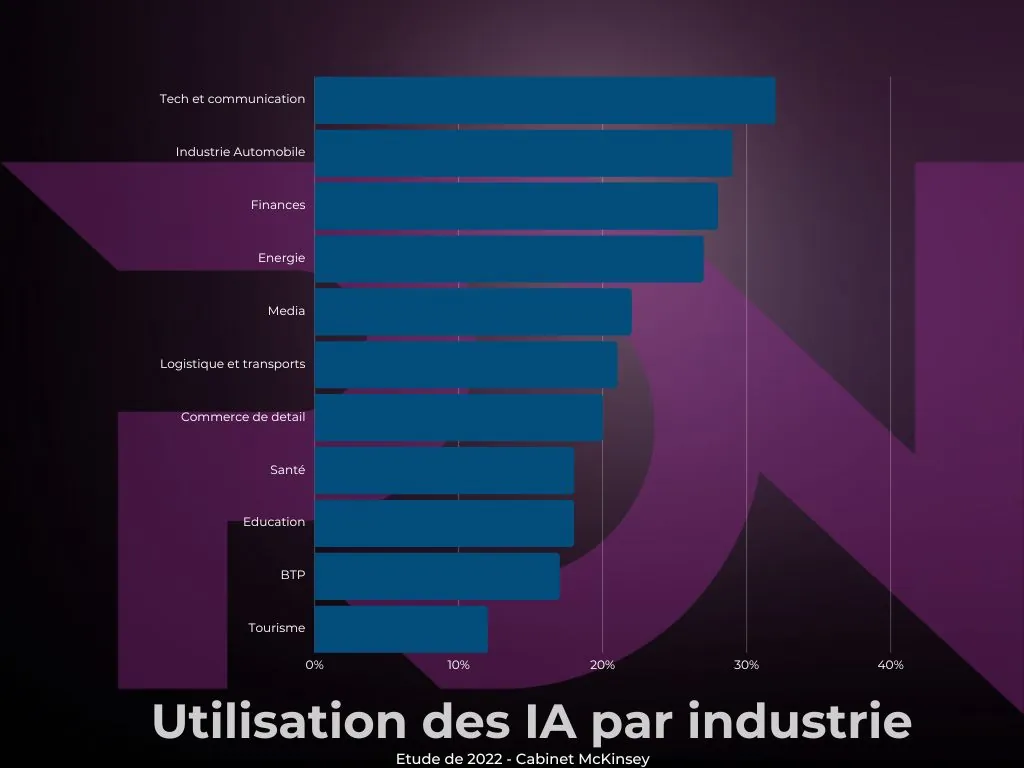
AI has already slipped into every aspect of our lives, revolutionizing many industries along the way:
- Health care: AI-powered diagnostic tools have improved disease detection, allowing more accurate and faster diagnoses, while AI-driven drug discovery is speeding up the development of new treatments. Robotics and AI also play a key role in precision surgery, improving patient outcomes and reducing recovery times.
- Finance: the applications are numerous and cover areas as varied as fraud detection and portfolio management. Robo-advisors and algorithmic trading systems have made investing more accessible and more rational, while AI-driven risk assessment models have improved the accuracy of credit evaluations.
- Production and industry: the setting up of smart factories, where robotics and advanced automation systems optimize production processes, reducing waste and increasing efficiency. AI-powered predictive maintenance has also proven invaluable for reducing equipment downtime and minimizing operating costs.
- Transportation: Autonomous vehicles and AI-powered traffic management systems are revolutionizing transportation, promising to reduce accidents and ease congestion. There are also applications in logistics, streamlining supply chain management and optimizing delivery routes.
- Retail: AI improves the customer experience by enabling personalized recommendations, intelligent chatbots and advanced inventory management. AI-based analytics also help retailers better understand customer behaviour and preferences, so they can tailor their offerings accordingly.
- Agriculture: AI-driven precision agriculture techniques have increased crop yields and optimized resource management. From identifying pests and diseases to determining the best times for planting and harvesting, AI plays a crucial role in ensuring global food security.
Join us in early September, when we return, for the next instalment of our series on AI. In the meantime, don't hesitate to contact us if you have content to protect, and come back and read us when we return for the rest of our series on artificial intelligence. Happy holidays!
Share this article