Piracy and Social Media (1)

Social media is now part of the daily life of nearly every internet user, and it has become an essential component of marketing. That is why brands put an immense amount of work into communications to maintain brand awareness, engage with existing customers or acquire new consumers.
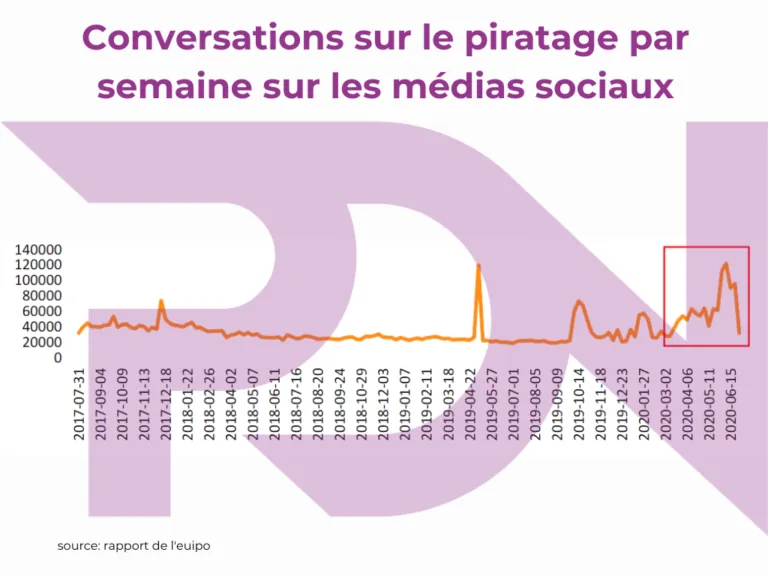
It is therefore not surprising that pirates have taken up all of these digital marketing techniques to maintain or create contact with their existing or potential users, and that they implement real marketing strategies. This is where social media comes in. Like legitimate brands, pirates – large and small – aggressively use social media to make themselves known and to promote their brand and services.
AgencePDN gets this kind of content removed: see our Fraudulent ads service.
In this article we will look at the particular case of sports piracy, and at the social network that remains the most popular: Facebook. In the second part of our article we will discuss the role of other networks, and more specifically Reddit, Twitter and Discord.
Live sports streaming on social media
The reasons why illegal streaming is growing and spreading on social media are mainly the following:
- The growing availability of faster bandwidth (for users and illegal broadcasters alike) makes it possible to access pirate streams with an image quality that is closer and closer to, or even identical to, that of legitimate streams.
- Video is now at the heart of the business models of social media platforms because of its ability to monetize content with advertising.
- The platforms themselves were designed from the start to spread information quickly – and in a largely uncontrolled way – through an interlocking cloud of hashtags, likes and shares. This system allows a “snowball” effect – the more users interact with a piece of content (simply by clicking links or liking and sharing), the more the algorithm will place that content at the top of other users' news feeds, thereby finding a new audience. Since all posts – legal or not – about a sporting event are particularly charged with emotion for internet users, there is a lot of interaction – which allows illegal content to grow all the faster.
The figures for the latest football World Cup are not yet final and are still being analyzed, but the 2018 World Cup was probably the most studied event when it comes to examining the piracy of sporting events on social media. We do know, however, that the 2022 figures will have increased – sports piracy is itself on the rise.
As a reminder, here are the figures for 2018 – pending an update article on the figures for the most recent edition:
- About 20% of viewing took place online – in 2022 this proportion is estimated at 30% or more
- The number of Facebook links almost tripled during the tournament (this trend appears consistent with the one observed in 2022)
- In total, 40,713 links to illegal broadcasts were detected.
- Social media played an essential role in piracy during the 2018 tournament, with a total of 14,615 illicit links across the three most popular social media networks, Facebook, Twitter and Instagram, representing 41,371,139 viewers. To date we do not yet have the data for 2022.
- The total illegal audience for 2018 is estimated at 100 million. What gives pause for thought is that in 2014, this audience was estimated at only 20 million, which suggests that the total figure for 2022 will be higher still.

The average internet user generally uses the most popular social media. Being present on Facebook (which remains the most used social media in the world), and especially on the Marketplace sales platform, therefore remains an excellent way to reach the public, who do not necessarily know about unofficial sites, or even to appear to people who are not even looking for illegal content, thanks to the algorithm that shows ads related to your real or presumed interests in your news feed.
Indeed, despite a ban on advertising illegal content on the platform, Facebook does not check the ads posted upstream at all; to have ads removed, rights holders must therefore absolutely ask Facebook to remove the ads, pages and groups promoting content that infringes their rights.
Moreover, paid ads are not checked either, so ads for external sites – notably for illegal IPTV – are regularly found.
A fairly old transparency report (from 2017) estimated about 10,000 posts a day removed on Facebook, which is still few. We do not know the current number of daily removals – more than 5 years after the report.
See you in early March for the rest of our article. In the meantime, if you have content to protect – a film, a series, a music album or a sporting event – don't hesitate to contact one of our account managers, we will be happy to help, so that you can take back control of your revenue!