Fighting human weaknesses

In the first part of our article, we saw why humans can be considered the weak link in cybersecurity. Faced with the many weaknesses caused by people, it is imperative to put suitable solutions in place to manage risks as well as possible. Cyberattacks that exploit human error are constantly increasing, making a robust protection strategy, adapted to new technological challenges, necessary.
What are the solutions for strengthening cybersecurity in the face of human vulnerabilities?
Awareness and ongoing training
One of the most effective ways to reduce the human impact on cybersecurity is to invest in user training and awareness. Regular sessions should be organized to teach employees and individuals to spot common threats such as phishing, ransomware and social engineering attacks.
AgencePDN gets pirated content removed: see our solutions by sector.
Awareness campaigns should include concrete, interactive scenarios to help employees recognize and report intrusion attempts. It has been shown that hands-on exercises and role-playing lead to better retention of cybersecurity best practices.
Companies can also use attack simulations (phishing tests, interactive awareness campaigns) to assess and strengthen their employees' reflexes when faced with scam attempts. By identifying employees' vulnerabilities, it becomes possible to adapt training and improve responsiveness to cyber threats.
Putting strict security protocols in place
Implementing strict protocols reduces the risks linked to human error. Essential measures include:
- Multi-factor authentication (MFA): Requiring several authentication factors (password + SMS code, physical security key, etc.).
- Strict access and privilege management: Applying the principle of least privilege (Zero Trust) by limiting access rights to authorized people only.
- Data encryption: Securing sensitive information to prevent its compromise in the event of a leak.
- Automatic software updates: Avoiding known vulnerabilities by keeping all systems and applications up to date.
- Network segmentation: Restricting access to certain parts of the network according to users' needs to limit the damage in the event of an intrusion.
A regular audit of security policies is also essential to detect and fix potential weaknesses before they are exploited.
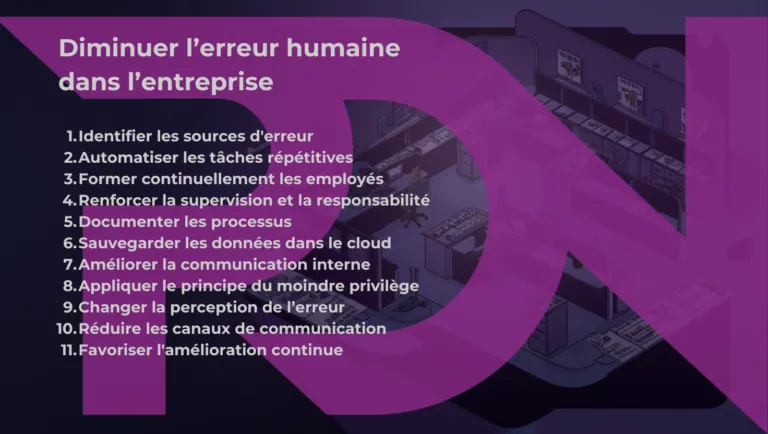
Oversight of, and alternatives to, Shadow IT
Shadow IT, meaning the use of tools and software not approved by the IT department, is a significant threat to company security. Rather than fighting this phenomenon without offering viable alternatives, companies must provide flexible and secure solutions that meet employees' needs. These solutions include:
- Providing approved, user-friendly tools that meet employees' expectations.
- Putting in place bring-your-own-device (BYOD) management policies and making sure personal devices meet security standards.
- Offering better visibility into the applications in use through monitoring solutions and analysis of suspicious behaviour.
Making employees aware of the risks of Shadow IT and the consequences of uncontrolled use of third-party software.
Detecting and reacting quickly to cyber threats
Companies must take a proactive approach to cyberattacks by investing in advanced detection systems:
- Deploying EDR (Endpoint Detection and Response) solutions to monitor anomalies and detect threats in real time.
- Using AI and machine learning to analyze suspicious behaviour and prevent cyberattacks before they happen.
- Setting up an incident response team able to act quickly in the event of a security breach.
- Penetration tests and regular audits to identify vulnerabilities before they are exploited by cybercriminals.
A fast and effective response to a cyberattack can limit the impact of a security breach and allow operations to resume with peace of mind.
Creating a cybersecurity culture
Cybersecurity must not be solely the responsibility of the IT department. It is crucial to create an organizational culture in which every employee feels responsible for protecting data.
- Encouraging good practices by rewarding secure behaviour and putting in place policies that encourage reporting fraud attempts.
- Fostering open communication between employees and cybersecurity experts so that potential incidents are reported without fear.
- Organizing internal awareness campaigns to strengthen employees' buy-in to cybersecurity policies.
- Setting up cybersecurity performance indicators to track the progress of good practices within the organization.
By combining these different solutions, companies can reduce the risks linked to human vulnerabilities and strengthen their cybersecurity posture in a constantly evolving threat environment.
Join us in April for our new theme. In the meantime, if you have a film, series, software or ebook to protect, don't hesitate to call on our services by contacting one of our account managers; PDN has been a pioneer in cybersecurity and anti-piracy for more than ten years, and we certainly have a solution to help you. Happy reading and see you soon!
Share this article