7 Common Myths About Copyright
What is copyright again?
Put simply, copyright is the right to use, exploit and reproduce your work.
You therefore have the right to:
- Sell, distribute and exploit your work
- Reproduce the work on any medium
- Create derivative works (prequels, sequels, translations…)
- Perform the work in public (give a concert, stage a play…)
These rights are reserved to you, unless you have assigned them to someone.
AgencePDN gets pirated content removed: see our solutions by sector.
Of course, each country has its own laws. Most of the guidelines described below come from American legal principles, but they are similar in most countries. And if your work is available anywhere on the web, you must comply with these principles anyway because of the Berne Convention.
1. Copyright works the same way no matter what my status is
False. Who you work for, and under what status, affects the extent of your rights over your creations.
- If you work for yourself, your work belongs to you, unless you assign your rights to someone else.
- If you are an employee of a company, the things you create (texts, music, images) belong to that company.
- If you are self-employed, the material belongs to you. Your client of course has the right to use it, but the intellectual property does not belong to them – unless you have sold them some or all of your rights.
2. Fifty Shades of Grey does not respect copyright.
Should Fifty Shades of Grey be banned?
If you have tried to read the book, you know how bad it is, and that the films are worse. But you probably also know that it all started as fan fiction of the equally questionable Twilight – it is a derivative work, and therefore illegal.
Problem solved?
Not really. The author did in fact start a series of fan fiction on Wattpad that referred directly to the Twilight universe. Fan fiction, even if it is not entirely legal, is tolerated as long as it does not generate profit. When the book was rewritten for publication, all the specific references to the Twilight saga were removed and the characters’ names were changed.
Some elements of the story are similar, but they are not original enough to fall under intellectual property laws.
A generic idea cannot be protected.
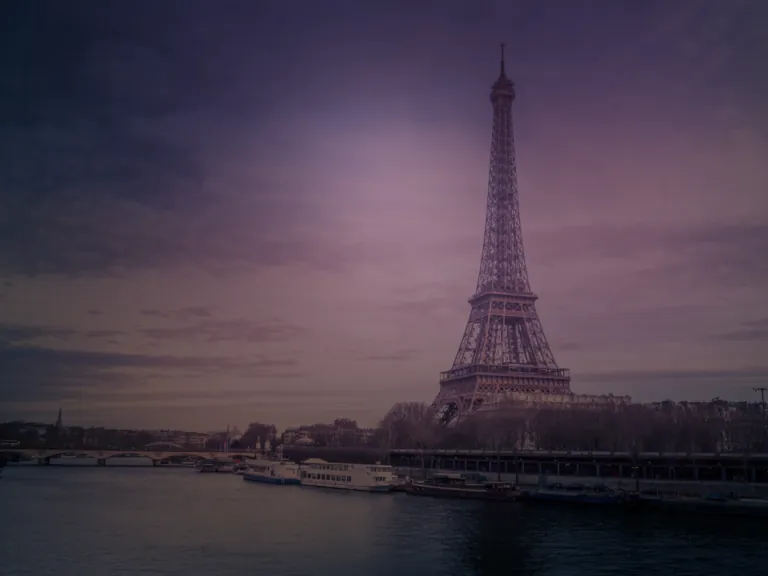
3. Anyone can take a photo of the Eiffel Tower at night
What is less original than a photo of the Eiffel Tower? A photo of the Eiffel Tower at night.
Even though it sounds like the start of a bad joke, this question is relevant when it comes to intellectual property laws.
Originality can be a criterion, but sometimes things get complicated.
The Eiffel Tower’s lighting system, for example, was protected in France in 1985 for 70 years. In theory, any photograph or video of the Eiffel Tower at night should therefore be authorized by the Société d’Exploitation de la Tour Eiffel – even though there has never (yet) been a lawsuit over it.
4. If it’s free, it’s not copyright infringement.
False. Copyright has nothing to do with price. Some creators tolerate it, but it remains illegal – unless a specific licence called copyleft is used – Creative Commons being the best known. These licences let you use someone else’s work – under certain conditions.
5. If there is no copyright notice, anyone can freely copy the content
Again, false. But if the work carries a copyright notice, it will be easier to enforce your rights. The © has no legal value in itself, but it reminds users that the work is protected. It will be hard for the thief to claim they acted in good faith.
6. You can’t protect a website
But you can protect its content. A website is generally made up of text, images and sometimes photos – and all of these elements are works that can be protected.
This also means that if you create YOUR website, you do not have the right to use text, images or sounds created by someone else – unless the author has authorized you to use their work, or the works used are under copyleft.
A domain name cannot be protected; the only solution is to buy every possible domain name to avoid any confusion… obviously, most people cannot afford to.
By the way, the name fiftyshadesofbadwriting.com is still available!
7. Parodies fall under copyright
True… and false. You have the right to be funny, and in principle, parodies are allowed. The problem is that parody and humour can be very subjective. One person’s humour is not necessarily another’s.
Copyright may seem a little complicated… and it is.
These tips will let you adopt a number of good practices, but intellectual property law is subtle. There is no legal definition of what is original or funny.
If you want to be sure you are protected, or if you are not certain that content you found online violates your rights, do not hesitate to contact us – our legal team is here to help.
Next week, we will look at The Pirate Bay and the huge success of this pirate site that has been active on the networks for more than 20 years.